Two templates are written for prescribers:
- Psychiatric initial evaluation: a first visit with a new client, a diagnostic evaluation or new-patient visit, with a psychotherapy section for visits that include therapy.
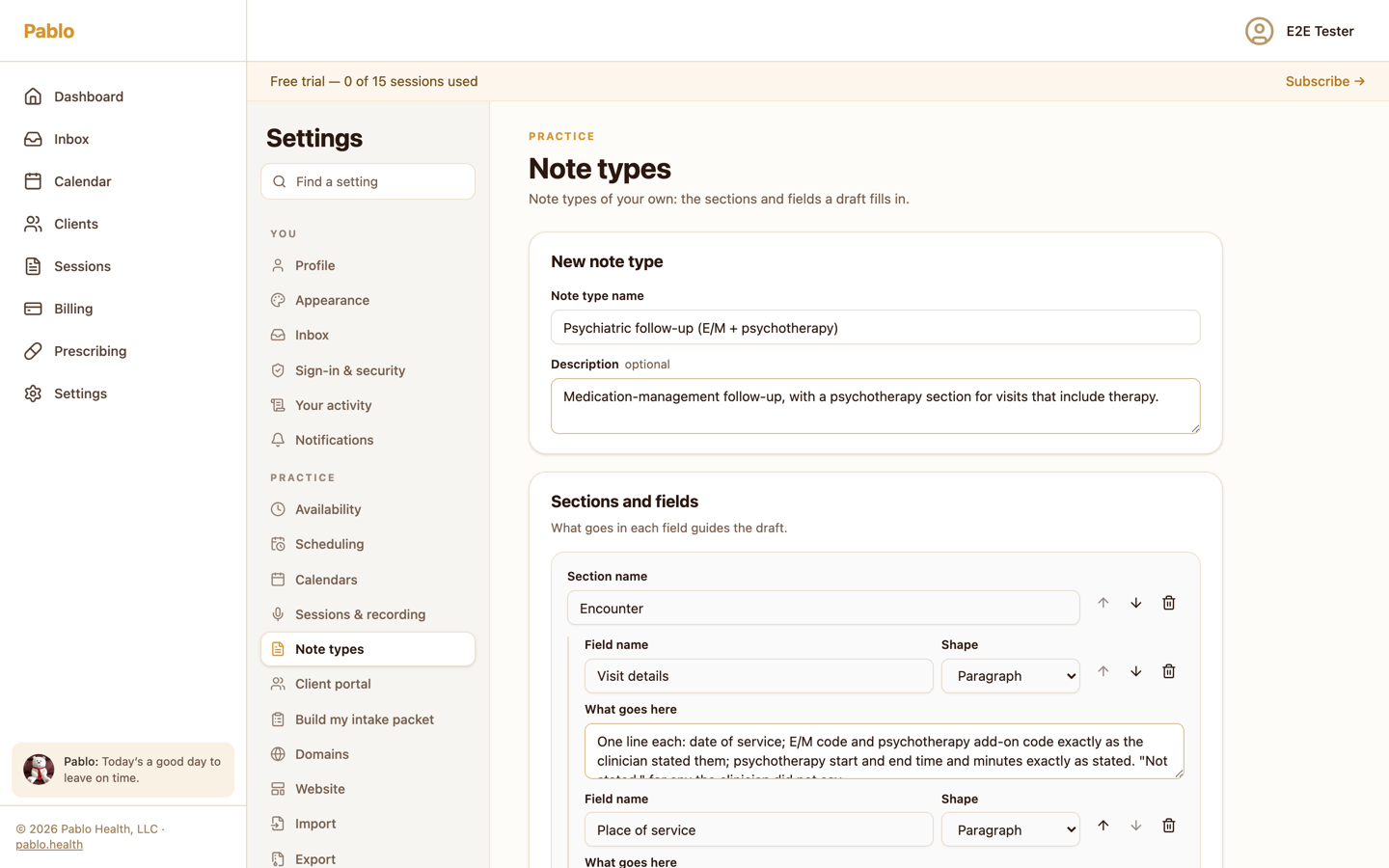
- Psychiatric follow-up (E/M + psychotherapy): a medication-management follow-up, with a psychotherapy section for visits that include therapy.
Use a template
Open Settings > Note types. Under Start from a template, choose Use next to the one you want, change anything you like, then choose Save note type. You can then choose it when you book a session.
What the drafts include
Initial evaluation: chief complaint, history of present illness, a psychiatric review of systems, substance use, psychiatric, trauma, social, medical and family history, medications and allergies, mental status exam, risk assessment, measures, assessment and diagnoses, treatment plan, prescriptions and labs, follow-up, and psychotherapy.
Follow-up: interval history, medication adherence and side effects, substance use, medications and allergies, risk assessment, mental status exam, measures, assessment, medical decision making, plan, and psychotherapy.
Diagnoses, codes and times come from you
- Diagnoses are written as you stated them, with the code you gave. The draft doesn't add a diagnosis or a code. In a follow-up, the diagnoses come from the client's problem list, plus any you name in the visit.
- Codes, visit level and times come only from what you said. If you didn't say, the draft reads "Not stated."
- Risk is written in the words used in the session.
- Psychotherapy stays empty when no therapy happened.
To confirm the minutes of therapy, see Visit times.